“Beasts of Carnaval” Rosália Rodrigo

Mira (Harlequin Enterprises) HarperCollins. To be published July 29, 2025.

Recommended for Adults.

Reviewed by: Alma Ramos-McDermott

Category: Adult

Rating: 5 stars

Sofía missed her twin brother Sol. Born slaves, they were sold away from their loving mother when they were 5 years old to the Hacienda Esperanza in Etérea owned by rich Hisperians. Over 300 years ago Hisperians conquered Etérea and its native people, the Taike’ri. Though Hisperians raped, sold, and murdered them by the hundreds of thousands in their lust for gold and riches the Taike’ri were almost decimated, but their descendants lived on as mestizos and slaves. Sol and Sofía knew some of their ancestral history, but most had been obscured through years of Hisperian dominance.

Many years passed while they labored under their bonds. Five years earlier Sol and his master left to attend el Carnaval de Bestias on a nearby island but never returned. Sofía spent years collecting every scrap of information on the Carnaval that she could find, seeking information on her brother. Though she had been freed at age 14 it took her many more years to gather the courage to leave Adelina, her young mistress and best friend, to go find her brother.

She thought she’d succeeded in slipping away, but Adelina found out and they went together. When they arrived on the island, it was unlike anything Sofía had ever experienced. Everything was beautiful. The hotel was detailed and opulent, and every desire was met. Hotel workers wore scary-looking masks, portraying themselves as vejigantes. Guests also wore masks, spending their days partying, drinking, carousing, and dancing. Everyone slept and rose at the same time, ate sumptuously decadent food, and were entertained with nightly carnival-like shows. Everything followed the same incredible pattern every day, so the girls soon forgot why they’d come to the island. They were having too much fun.

Things went on this way for a long time, until Sofía began to remember why they were there. Though she kept forgetting, she also began having strange dreams and felt like she was being watched. Adelina was oblivious, but Sofía was determined to find out why she kept forgetting and discover what was hiding under the Carnaval’s perfect surface. What she found out would shake the foundations of her life and cause her to question everything she’d ever known to be true.

As I read, my mind kept making comparisons between the Taíno and the Taike’ri. Descendants of the Taíno of Puerto Rico, like me, grew up thinking our ancestors were destroyed by Columbus and his fellow conquistadores/torturers. We are still here! There is much to learn about the Taíno, so I enjoy books like this which shed more light on their life before Columbus “discovered” them.

Recommended for Adults.

I received a digital advance reading copy of this book from the publisher in exchange for an honest review.

Note: This review was originally published on You Decide: Should I read it or not?

Reproduced here as a courtesy to Alma Ramos-McDermott.
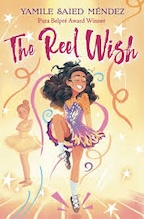
“The reel wish” Yamile Saied Méndez

Tu Books (Lee & Low Books Inc.) 2025.

Reviewed by: Alma Ramos-McDermott

Category: Elementary/Middle School

Rating: 5 stars

Ever since they were little girls Florencia and her best friend Selena have been going to ballet school and performing in productions. Now that they’re eleven they are allowed to try out for the role of Clara in the studio’s production of “The Nutcracker.” One by one the dancers fail to capture their teacher’s attention, but Florencia’s audition is perfect, and she wins the role. Unable to hide her jealousy, Selena turns her back on her best friend and ices her out of her life. Other dancers accuse the teacher of political correctness as being the only reason Florencia got the role. Things get worse after Florencia has a panic attack on opening night, Selena steps into her role, and she’s thrown out of ballet school for embarrassing the teacher.

Since ballet and Selena have been part of her life for so many years, Florencia doesn’t know how to cope. Her panic attacks worsen but, with the help of her psychologist, medication, two fringe students she met at school, and Irish dancing, Florencia starts to make a new life for herself. However, Selena is not content with being queen at her ballet school as she and her new friends want to ruin Florencia’s life. Though Florencia has always been one to internalize her feelings, she will have to learn to stand up for herself.

Yamile has created a believable character in Florencia, as the pitfalls of losing one’s best friend, trying to create a new social life when one’s old life is in shambles, and bullying are often real parts of 6th grade.

Recommended for ages 10-14.

I received a copy of this book from the publisher in exchange for an honest review.

Note: This review was originally published on You Decide: Should I read it or not?

Reproduced here as a courtesy to Alma Ramos-McDermott.

“Bobbito’s book of b-ball bong bong!: A memoir of sports, style, and soul” Bobbito García

Edge of Sports (Akashic Books.) 216 p. To be published July 1, 2025.

Reviewed by: Alma Ramos-McDermott

Category: High School/Adult

Rating: 5 stars

Bobbito grew up on 97th Street in New York City and, like everyone else in the 70’s, 80’s, and 90’s, grew up playing basketball. Pick-up games in NYC were rough, and he had to be tough if he wanted to play. He had to learn to hold his own and to have style while doing it. Bobbito learned the game by playing against and watching future and current NBA and NCAA players on the courts, received tips from local coaches and friends, and practiced hard every single day. His life revolved around basketball. Though he wasn’t as good as some of the greats that played in Harlem and nearby courts back in the day, Bobbito could hold his own and developed a few tricks that wowed the crowd.

Eventually, his knowledge and love for the game took Bobbito around the world as he became a coach, sports interviewer, writer, producer, hip hop host, and more. However, nothing could ever make him happier than the feel of a basketball in his hands and the swish of the net as his jump shot hit its mark.

In his own words Bobbito describes the good and bad of growing up in NYC, describing in detail how basketball was a unifying sport and gave purpose to his life. Despite often being called a white boy because of his light skin, Bobbito was proud of his Puerto Rican heritage and his skills on the court silenced naysayers.

Teens and adults interested in the game of basketball, its famous greats, and more, will be drawn into Bobbito’s story through his humor, first-person narrative, no-holds-barred NYC street lingo, and large, colorful photographs that accompany the text. It would make a great book club read for reluctant teen readers especially if, after every chapter, they were given the chance to practice what they learned on the courts.

Recommended for ages 16 and older.

Note: This review was originally published on You Decide: Should I read it or not?

Reproduced here as a courtesy to Alma Ramos-McDermott.
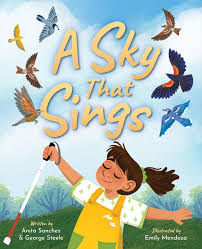
“A sky that sings” Anita Sanchez & George Steele; ill. by Emily Mendoza

Lee & Low Books. 2025.

Reviewed by: Alma Ramos-McDermott

Category: Elementary school

Rating: 5 stars

Though Mia is blind, her teacher taught her to “see” birds through listening to their songs and calls. One sunny, spring afternoon she and her aunt set off for the park where Mia identifies multiple types of birds through their songs. She calls herself a bird-listener, instead of a birdwatcher, and uses her listening skills to teach her aunt how to identify the many different birds they hear. As they walk, Mia eagerly anticipates hearing her favorite bird, and is thrilled when she finally gets to hear it. Its voice makes her feel as if she’s flying into a singing sky with it.

As Mia and her aunt lead readers along a paved path through the woods, their journey is shown through full-page, colorful illustrations. The text is filled with descriptions readers can hear and decipher such as the “klunk, thunk” of closing car doors or the sound of a crunchy pathway. Idioms like “notes come pouring out of the sky like raindrops” or “songs weave together like tangled threads” keep Mia’s story flowing. Young readers will not only learn the sounds of different birds but will enjoy interpreting the many uses of figurative language in phrases such as “a whisper of wings,” and “wind…flows over me like water, and “notes come pouring out of the sky like raindrops.” The back matter includes sources where readers could go to learn more about birds.

Highly recommended for ages 6-10.

Note: This review was originally published on You decide: Should I read it or not?

Reproduced here as a courtesy to Alma Ramos-McDermott

¡Tocamos! Cynthia Weill; Photographed by Otto Piron; Wooden sculptures by Avelino Pérez

Cinco Puntos Press (Lee & Low Books Inc.) 2025.

Reviewed by: Alma Ramos-McDermott

Category: Elementary school

Rating: 5 stars

Through photography, bilingual text, and beautifully hand carved, painted, wooden birds, readers are introduced to musical instruments from Mexico. The end notes state the instruments represent those played by musicians from orchestras that perform in the town square of Oaxaca, Mexico on festival days and Sundays.

Well-known instruments such as guitars and maracas are featured against the lesser-known harp and double-bass on multi-colored pages framed with geometric designs. The extremely detailed, brilliantly colored birds and instruments guide the simple, bilingual narrative.

Recommended for ages 3-7.

Note: This review was originally published on You Decide: Should I read it or not?

Reproduced here as a courtesy to Alma Ramos-McDermott.
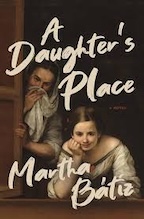
“A daughters place” Martha Bátiz

House of Anansi Press, Inc. To be published May 20, 2025.

Reviewed by Alma Ramos-McDermott

Category: Adult

Rating 5 stars

“Don Quixote,” published in 1605, was translated into many languages and became well-known around the world. Its author, Miguel de Cervantes, lived with his rich wife in Spain but, away from her, lived a life of semi-poverty. Unable to collect money on his masterpiece after its first printing, he was constantly in debt as he sought sponsors for what he wanted the public to see in his writings. “A daughter’s place” tells of de Cervantes’ struggles as he sought to keep his unsuspecting wife away from the life he led with his sisters, niece, and illegitimate daughter in another city.

Fifteen-year-old Isabel lived in poverty with her grandmother, sister, aunt, and cousins until she was told of her status and brought to her Aunt Magdalena’s home in 1599. There, though she looked exactly like Miguel, she was told to act as a maid to keep neighbors from being suspicious. At his request she was registered as Isabel de Saavedra, his nom de plume, because he didn’t want his wife to know of his infidelity. Magdalena was given legal guardianship and, though treated as family and schooled in reading, sewing, and deportment by both of her aunts and her cousin Constanza, Isabel felt as if she didn’t belong to anyone.

Through Isabel and Constanza’s alternating voices, the highs and lows of the de Cervantes household over the years are detailed along with difficulties females faced in a male-dominated world. Though each of the them were bound by societal ties, they found their voices to rebel in uniquely different ways. “A daughter’s place” is their story, as well as Miguel’s.

In my college freshman English comp. class, my fellow Hispanics and I cringed when our professor mispronounced the name “Don Quicksot.” Though we didn’t know anything about him, we recoiled at hearing what should have been pronounced “Keyhote.” “A daughter’s place” gives background information on how that famous knight came to be, as well as insight into the Spanish empire of Miguel de Cervantes’ time and place. Readers will gain historical knowledge of old Spain as well as insight into how women from his household bent rules to live the life they chose, rather than one chosen by men.

Recommended for Adults.

Note: This review was originally published on You Decide: Should I read it or not?

Reproduced here as a courtesy to Alma Ramos-McDermott

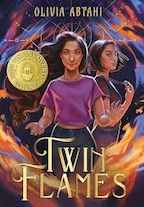
“Twin flames” Olivia Abtahi

Tu Books (Lee & Low). 2024

Reviewed by Alma Ramos-McDermott

Category: High School

Rating 5 stars

Eighteen-year-old twins Bianca and Leila didn’t like each other very much. Though sisters, raised by Argentinian/Iranian parents, they were complete opposites. Leila didn’t care about her heritage, dressed too girly, liked to sew, cook, and garden. She had plans to marry her high school sweetheart, have his children, and never leave their little town of Ayers, Virginia. Bianca was rough and tumble goth, spoke Persian and Spanish, loved learning about their family’s heritage, and couldn’t wait to see Ayers disappear in her rear-view mirror after graduation. It had been years since they’d spoken a civil word to each other, as each were biding their time until they could finally go their separate ways.

Everything changed the day they turned eighteen years old. After strange fires and rumors of fiery demons circulated, they found out evil djinn were loose in Ayers. Their prince, Cyrus, possessed Leila because she didn’t wear an iron ring their father had gifted them for protection as she didn’t like anything Iranian. Years ago djinn had granted a favor to a family member who had used them as collateral, and had come to collect the twins as payment. They would be a bridge that would allow these demons to possess humans and conquer the world.

Faced with the possibility of losing their souls, and Ayers to djinn, the twins forgot their animosity and joined forces. With thousands of djinns at Cyrus’ command, how were a pair of Iranian/Argentinian teens equipped to fight for their lives and for everyone in their town? It would take more than they could offer if they were going to conquer the forces of evil.

I was transported once I started reading and finished in one sitting. Fantasy, adventure, jealousy, evil, greed, anger, love, hope, friendship, and sisterly love all combined as I was transported into Bianca and Leila’s desperate fight for their souls and those they loved.

Highly recommended for ages 14 and over.

Note: This review was originally published on You Decide: Should I read it or not?

Reproduced here as a courtesy to Alma Ramos-McDermott

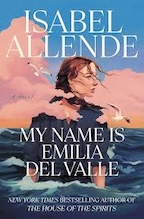
“My name is Emila del Valle” Isabel Allende Translated from the Spanish by Frances Riddle

Ballantine Books (Random House). To be published May 6, 2025.

Reviewed by Alma Ramos-McDermott

Category: Adult

Rating: 5 stars

Emilia was born in 1866 to a bitter woman who, when she was a novice nun, got pregnant. Unable to continue living with the other nuns, she married an older man who had worked with her when she was a novice and loved her. As Emilia grew, she was inundated with stories of her rich and cowardly father who refused to acknowledge his daughter and the inheritance she was owed from his rich coffers.

Emilia loved her stepfather, who taught her everything he knew and instilled in her that she could be anything she wanted to be. As a female she was expected to follow the pre-ordained path of marriage, or specific feminine vocations. However, Emilia had no desire to be a wife, nurse, or teacher. Her passion was writing so, under a male pseudonym, she began writing a series of successful dime store crime novels.

At age twenty-two Emilia became a crime reporter at The Daily Examiner in San Francisco, paired with a male reporter who took her under his wing. Eventually they travelled to Chile to report on its civil war, as Emilia convinced the editor to also let her go because her father was Chilean, and she spoke Spanish.

As Emilia learned more about Chile, its beauty, and its warring factions, she began feeling a love and connection to the country. However, separated from the man she loved, and finding herself on the wrong side of the winning army, Emilia soon found out Chile’s beauty didn’t extend to the black hearts of her countrymen.

In her own words, Emilia explains why she was not the typical female of her time and place. Her rich descriptions and life experiences will keep readers on the edges of their seats until its final, satisfying conclusion.

Highly recommended for Adults.

Note: This review was originally published in: You Decide: Should I read it or not?

Reproduced here as a courtesy to Alma Ramos-McDermott

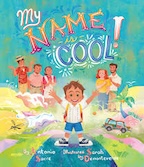
“My name is Cool!” Antonio Sacre; ill. by Sarah Demonteverde

The current image has no alternative text. The file name is: my-name-is-cool.jpeg

Familius. 2022.

Reviewed by Alma Ramos-McDermott

Category: Elementary school

Rating: 5 stars

Is it possible for a 5-year-old to have more than two names? Antonio Bernardo Sacre will be first to tell you his name is “Mr. Magoo, El Señor Magoo, El Goo, Antonio, Bernardo, Sacre, Papito, Coquito, Futinquito, El Capitán de los Mosquitos.” 

Antonio Bernardo Sacre has never had any trouble with everyone knowing all his names, but now it’s time to go to kindergarten. When Mrs. Green asks for his name Antonio Bernardo Sacre proudly recites all ten of them. Uh oh! What will happen when a boy with ten names meets a teacher who only thinks he can have two names?

This amusing story is highlighted with full-page, colorful illustrations to complement Antonio Bernardo Sacre’s list of names. As the owner of 10 names myself (and a former kindergarten teacher) I’m not happy with how his teacher handled the situation. However, if Mr. Magoo, El Señor Magoo, El Goo, Antonio, Bernardo, Sacre, Papito, Coquito, Futinquito, El Capitán de los Mosquitos is happy, then Alma, Rosa, La Loca, Mi Vida y Corazón, Tire, Ramos, Feliciano, Mercedes, O’Neill, McDermott is happy too.

Recommended for ages 5-10.

Note: This review was originally published in: You Decide: Should I read it or not?

Reproduced here as a courtesy to Alma Ramos-McDermott

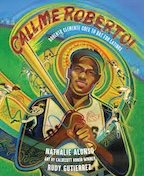
“Call me Roberto: Roberto Clemente goes to bat for Latinos” Nathalie Alonso; art by Rudy Gutierrez

The current image has no alternative text. The file name is: call-me-roberto.jpeg

Calkins Creek (Astra Books for Young Readers). 2024.

Reviewed by Alma Ramos-McDermott

Category: Elementary school

Rating: 5 stars

(Includes “Author’s note,” photographs, “Glossary,” “Timeline of Roberto Clemente’s life,” and a “Selected Bibliography.”) 2024.

Exciting, action-filled descriptions of Roberto Clemente’s incredible hits, throws, and leaps that lifted the Pirates to two World Series, are contrasted with the lows he experienced due to racism. Reporters, opposing players, and fans didn’t like that he was Black and spoke Spanish, while teammates ignored him. Roberto insisted on being called by his first name, while reporters wanted to call him “Bob” because it sounded “more American” and made fun of his accent by phonetically quoting him in newspapers. During spring training in segregated Florida Roberto couldn’t leave his far-away room in a hotel for Blacks that was nothing like that provided to his White teammates. The constant prejudices he endured made Roberto more determined to have Latino players be treated equally.

Roberto was proud to be from Puerto Rico, and they were proud of him. After his first World Series win hardly anyone in Pittsburgh cared that he’d had a hit in every game, but Puerto Rico threw him a huge parade. They were always ready to celebrate his talent when he returned home, but Pittsburgh and its reporters only saw his skin color. Roberto was interviewed after his second World Series win and shocked everyone when he spoke Spanish, giving his blessing to his children and asking his parents for theirs. Puerto Ricans were extra proud. 

Rudy Gutierrez’s lively and bold illustrations made with acrylic paint, colored pencils, and crayons fill each page. Scattered throughout are a series of Puerto Rican symbols like her elusive coquisflagpalm treesFlamboyan, and Taino petroglyphs, as well as musical instruments like the cuatrobomba drummaracaspandero, and pandereta (tambourine). These hidden jewels, fun for young readers to discover, allow Roberto’s story to be interspersed with his island’s history and music.

From humble beginnings in Carolina, Puerto Rico, to the pinnacle of his success with the Pirates in 1972, young readers will learn about the phenomenon that was Roberto Clemente. Alonso’s phrases from the beginning and end of Roberto’s story states “He lives to swing and slide. To catch. To throw. To run.” These sentences summarize Roberto’s beginning and his end. Though tragically killed almost 53 years ago, Roberto’s baseball legacy in Pittsburgh, and the love he had for Puerto Rico, will live forever in the minds and hearts of his fans.

I really hope this book wins a Pura Belpré Author award as well as an Illustration Award at the January 2025 ALA Media Awards in Phoenix. As a Puerto Rican, it makes me proud. I will be in Phoenix that Monday morning to hope, scream, and shout if/when it wins. Stay tuned!

Highly recommended for ages 6-10.

Note: This review was originally posted in You Decide: Should I read it or not?

Reproduced here as a courtesy to Alma Ramos-McDermott.