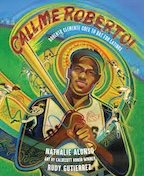
“Bobbito’s book of b-ball bong bong!: A memoir of sports, style, and soul” Bobbito García

Edge of Sports (Akashic Books.) 216 p. To be published July 1, 2025.

Reviewed by: Alma Ramos-McDermott

Category: High School/Adult

Rating: 5 stars

Bobbito grew up on 97th Street in New York City and, like everyone else in the 70’s, 80’s, and 90’s, grew up playing basketball. Pick-up games in NYC were rough, and he had to be tough if he wanted to play. He had to learn to hold his own and to have style while doing it. Bobbito learned the game by playing against and watching future and current NBA and NCAA players on the courts, received tips from local coaches and friends, and practiced hard every single day. His life revolved around basketball. Though he wasn’t as good as some of the greats that played in Harlem and nearby courts back in the day, Bobbito could hold his own and developed a few tricks that wowed the crowd.

Eventually, his knowledge and love for the game took Bobbito around the world as he became a coach, sports interviewer, writer, producer, hip hop host, and more. However, nothing could ever make him happier than the feel of a basketball in his hands and the swish of the net as his jump shot hit its mark.

In his own words Bobbito describes the good and bad of growing up in NYC, describing in detail how basketball was a unifying sport and gave purpose to his life. Despite often being called a white boy because of his light skin, Bobbito was proud of his Puerto Rican heritage and his skills on the court silenced naysayers.

Teens and adults interested in the game of basketball, its famous greats, and more, will be drawn into Bobbito’s story through his humor, first-person narrative, no-holds-barred NYC street lingo, and large, colorful photographs that accompany the text. It would make a great book club read for reluctant teen readers especially if, after every chapter, they were given the chance to practice what they learned on the courts.

Recommended for ages 16 and older.

Note: This review was originally published on You Decide: Should I read it or not?

Reproduced here as a courtesy to Alma Ramos-McDermott.
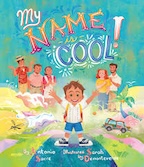
“My name is Cool!” Antonio Sacre; ill. by Sarah Demonteverde

The current image has no alternative text. The file name is: my-name-is-cool.jpeg

Familius. 2022.

Reviewed by Alma Ramos-McDermott

Category: Elementary school

Rating: 5 stars

Is it possible for a 5-year-old to have more than two names? Antonio Bernardo Sacre will be first to tell you his name is “Mr. Magoo, El Señor Magoo, El Goo, Antonio, Bernardo, Sacre, Papito, Coquito, Futinquito, El Capitán de los Mosquitos.” 

Antonio Bernardo Sacre has never had any trouble with everyone knowing all his names, but now it’s time to go to kindergarten. When Mrs. Green asks for his name Antonio Bernardo Sacre proudly recites all ten of them. Uh oh! What will happen when a boy with ten names meets a teacher who only thinks he can have two names?

This amusing story is highlighted with full-page, colorful illustrations to complement Antonio Bernardo Sacre’s list of names. As the owner of 10 names myself (and a former kindergarten teacher) I’m not happy with how his teacher handled the situation. However, if Mr. Magoo, El Señor Magoo, El Goo, Antonio, Bernardo, Sacre, Papito, Coquito, Futinquito, El Capitán de los Mosquitos is happy, then Alma, Rosa, La Loca, Mi Vida y Corazón, Tire, Ramos, Feliciano, Mercedes, O’Neill, McDermott is happy too.

Recommended for ages 5-10.

Note: This review was originally published in: You Decide: Should I read it or not?

Reproduced here as a courtesy to Alma Ramos-McDermott

“Call me Roberto: Roberto Clemente goes to bat for Latinos” Nathalie Alonso; art by Rudy Gutierrez

The current image has no alternative text. The file name is: call-me-roberto.jpeg

Calkins Creek (Astra Books for Young Readers). 2024.

Reviewed by Alma Ramos-McDermott

Category: Elementary school

Rating: 5 stars

(Includes “Author’s note,” photographs, “Glossary,” “Timeline of Roberto Clemente’s life,” and a “Selected Bibliography.”) 2024.

Exciting, action-filled descriptions of Roberto Clemente’s incredible hits, throws, and leaps that lifted the Pirates to two World Series, are contrasted with the lows he experienced due to racism. Reporters, opposing players, and fans didn’t like that he was Black and spoke Spanish, while teammates ignored him. Roberto insisted on being called by his first name, while reporters wanted to call him “Bob” because it sounded “more American” and made fun of his accent by phonetically quoting him in newspapers. During spring training in segregated Florida Roberto couldn’t leave his far-away room in a hotel for Blacks that was nothing like that provided to his White teammates. The constant prejudices he endured made Roberto more determined to have Latino players be treated equally.

Roberto was proud to be from Puerto Rico, and they were proud of him. After his first World Series win hardly anyone in Pittsburgh cared that he’d had a hit in every game, but Puerto Rico threw him a huge parade. They were always ready to celebrate his talent when he returned home, but Pittsburgh and its reporters only saw his skin color. Roberto was interviewed after his second World Series win and shocked everyone when he spoke Spanish, giving his blessing to his children and asking his parents for theirs. Puerto Ricans were extra proud. 

Rudy Gutierrez’s lively and bold illustrations made with acrylic paint, colored pencils, and crayons fill each page. Scattered throughout are a series of Puerto Rican symbols like her elusive coquisflagpalm treesFlamboyan, and Taino petroglyphs, as well as musical instruments like the cuatrobomba drummaracaspandero, and pandereta (tambourine). These hidden jewels, fun for young readers to discover, allow Roberto’s story to be interspersed with his island’s history and music.

From humble beginnings in Carolina, Puerto Rico, to the pinnacle of his success with the Pirates in 1972, young readers will learn about the phenomenon that was Roberto Clemente. Alonso’s phrases from the beginning and end of Roberto’s story states “He lives to swing and slide. To catch. To throw. To run.” These sentences summarize Roberto’s beginning and his end. Though tragically killed almost 53 years ago, Roberto’s baseball legacy in Pittsburgh, and the love he had for Puerto Rico, will live forever in the minds and hearts of his fans.

I really hope this book wins a Pura Belpré Author award as well as an Illustration Award at the January 2025 ALA Media Awards in Phoenix. As a Puerto Rican, it makes me proud. I will be in Phoenix that Monday morning to hope, scream, and shout if/when it wins. Stay tuned!

Highly recommended for ages 6-10.

Note: This review was originally posted in You Decide: Should I read it or not?

Reproduced here as a courtesy to Alma Ramos-McDermott.