“One last chance to live” Francisco X. Stork

Scholastic Press (Scholastic). 305 p. To be published September 3, 2024.

Reviewed by Alma Ramos-McDermott

Category: High school

Rating: 5 stars

Seventeen-year-old Nico has been in love with his neighbor Rosario since they were little. Though both loved to write and wanted to be famous, Rosario was obsessed. She needed writing to be her ticket away from their neighborhood. Since her future was all planned out Nico couldn’t understand why Rosario was later found dead from an overdose, so became preoccupied with finding out why she committed suicide.

As he struggled to figure out a strange dream he had about his own death, Nico’s pain was interrupted by the news his mother was very ill and his little brother was joining a local gang. Though he’s not interested in anything not having to do with Rosario, Nico must climb out of the hole he’s dug for himself or allow his dream to come true.

Told through Nico’s memories and the present time, his story of unrequited love, heartache, suicide, and death is complicated and messy. Stork left a few unexplained issues, which gives his teen readers opportunities to discuss solutions amongst themselves or in a book club.

Note: This review was originally posted in You decide: Should I read it or not?

Reproduced here as a courtesy of Alma Ramos-McDermott.
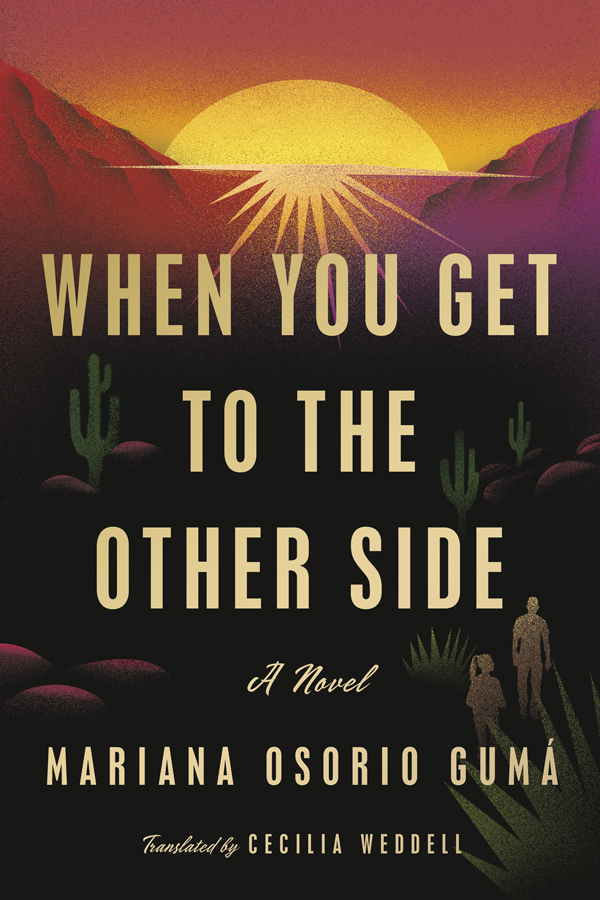
Book Review: When You Get to the Other Side

“When you get to the other side” Mariana Osorio Gumá; Translated by Cecilia Weddell. Cinco Puntos Press (Lee & Low). 300 p. 2022.

Reviewed by: Alma Ramos-McDermott

Category: Adults

Rating: 5 stars

Emilia and her older brother Goyo had been raised by their grandmother after their mother died. Mamita had been struck by lightning when she a little girl, allowing her to see and hear things not from this world. She became a powerful curandera, and Emilia had been training to follow in her footsteps.

After she died, Emilia and Goyo were alone for months since their father and uncles crossed the border years earlier. Their only hope of survival was to join a group heading for the border, where they hoped to reunite with their father in Colorado. However, after they made it across the border and into the desert, they were separated. Traitorous guides allowed the men to be captured by the Border Patrol while the women were taken by a trafficking ring. Emilia was going to be a special favorite of the leader because of her young age. Goyo managed to avoid capture but, despite thirst, cold, and hunger, he was determined to make it across the desert to find his little sister.

Emilia and Goyo’s trials capture readers as their stories alternate between memories of Mamita and horrors in the desert. Many Mexican women disappear on their way to the United States, and the author sheds light on their possible fates. Crimes committed by Mexican cartels against more than 100,000 missing people continue today.

Note: This review was originally posted in You Decide: Should I read it or not?

Reproduced here as a courtesy of Alma Ramos-McDermott

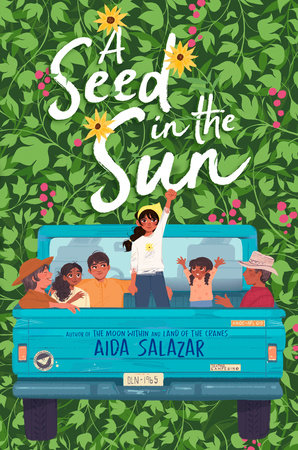
Book Review: A Seed in the Sun

A Seed in the Sun, by Aida Salazar. Dial Books for Young Readers (Penguin Random House). 255 p. 2022.(Includes Author’s note and Resources). 

Reviewed by: Alma Ramos-McDermott

Category: Children (Recommended for 10-14 years old)

Rating: 5 stars

Lula and her farmworker family travel from labor camp to labor camp performing back-breaking work under a hot California sun. Their work lives consist of little pay, no breaks, and squalid bedbug-filled hovels. In 1965 the family arrived in Delano to pick grapes. Lula was excited to start seventh grade, but Papá forced her to work. Though they had unknowingly walked into a strike organized by Filipino workers for better pay and working conditions, Papá refused to join. Day after day they crossed the picket lines until Mamá became very ill from pesticides. Papá couldn’t afford money for her care so, when he discovered union members could get free medical help, they joined the strike.

Lula was fascinated by the leadership qualities of co-union leader Dolores Huerta, while Papá would only listen to César Chávez because he believed men’s voices were more important than women’s. Through their struggles to survive the strong-armed tactics of the rich growers, which included arrests by crooked police and evictions, Lula worked to keep her dream alive. She hoped to make Papá proud and show him she was important.

In this story seeds are compared to farmworkers because seeds are strong, hold the memory of those who came before, become something new, and give new life. Though held down for decades by growers and crushed into the soil, farmworkers are seeds fighting to grow and survive. Having worked as a librarian with migrant farmworker families for years, I find it sad the battle for their rights continues.

Note: This review was originally posted in You Decide: Should I read it or not?

Reproduced here as a courtesy of Alma Ramos-McDermott.